The nuts and bolts of RFID

How much do RFID tags cost? What types of tags are available? Who controls RFID radio frequencies in New Zealand? Priya Kunthasami of mobile computing specialist Pocket Solutions answers these questions and more...


A basic RFID system consists of three components: an antenna, a transceiver, and a transponder that is electronically programmed with unique information. RFID tags can be read through packaging, including cardboard and the plastic wraps used to seal pallets but they are subject to interference, particularly from metal, so potential sources of interference must be identified during system planning.

Passive and active tags
The two main types of RFID tags available are known as ‘passive’ or ‘active.’ Passive tags receive their energy from the electromagnetic transmission of an external reader while active tags are powered by an internal battery. Passive tags are much lighter than active tags, less expensive, and they have an unlimited operational life.

The downside of passive tags include shorter read ranges and they require a high powered reader. Passive tags tend to be read only, and are typically programmed with unique data (usually 32 to 128 bits) that cannot be modified. The cost of passive tags can range from 20 cents to several dollars.

Self-powered active tags are typically read/write, allowing data on tag to be rewritten or modified. Active tags have longer read ranges than passive tags but they cost more - from $10 to $75 or more.

RFID tags come in a range of shapes and sizes. The following are the most common: Label: The tag is a flat, thin, flexible form Ticket: A flat, thin, flexible tag on paper Card: A flat, thin tag embedded in tough plastic for long life Glass bead: A small tag in a cylindrical glass bead, used for applications such as animal tagging under the skin Integrated: The tag is embedded or moulded into the object it is tagging Wristband: A tag inserted into a plastic wrist strap Button: A small tag encapsulated in a rugged housing.

Readers
An RFID reader is a radio frequency (RF) transmitter and receiver controlled by a microprocessor, which captures data and passes it to a computer for processing. As with tags, readers come in a wide array of sizes and types, and they range in price from $500 to $3,000 depending on their functionality.

Readers can be stationary (for example, beside a conveyor belt in a factory or loading bays in a warehouse), portable (integrated into hand held or vehicle mounted mobile terminals as peripheral devices), or even embedded in electronic equipment such as label printers. Most RF readers are capable of reading multiple tags within range, but the number of tags they can cope with and the reading speed will vary.

Frequencies
RFID tags are typically designed to transmit data on one frequency. The frequencies are generally classified as low (LF), high (HF), ultrahigh (UHF) and microwave.

Low frequency (less than 135 KHz) systems have short reading ranges and lower system costs and are the least susceptible to interference from liquids or metals. LF tags are commonly used in inventory control, animal identification and asset tracking.

Higher frequency (13.56MHz ) systems have short to medium read ranges and are cost effective for smart card applications. HF transponders offer good penetration through non-conductive materials and non conductive liquids.

Ultra-high frequency (868 MHz to 915 MHz) systems, provide long read ranges, high reading speeds, and are typically used for railroad car monitoring, toll collection systems and vehicle identification.

UHF requires line of sight and is more expensive. Microwave (2.45 GHz to 5.8 GHz) has similar properties to UHF transponders but with faster read rates and good penetration through non-conductive materials except for water and water-based solutions.

In general, the higher the frequency, the longer the read distance and the higher the data transfer rate will be. Unfortunately the system costs will also be higher the further up the frequency scale you go.

In New Zealand, the Ministry of Economic Development is the main body governing frequency allocation for RFID. Low and high frequency RFID tags can be used globally without a license, however, UHF cannot be used globally as there is not one single global standard.

Standards
One of the main confusions about implementing RFID systems stems from the lack of a common global standard. The International Standardisation Organization (ISO), the European Union and the US-based EPCglobal consortium (which has taken over the functions of the Auto-ID Centre, have all produced their own, sometimes conflicting standards.

The lack of a universal standard is one of the many problems facing companies trying to implement RFID.

Back to home

April 2005

By Priya Kunthasami
Pocket Solutions


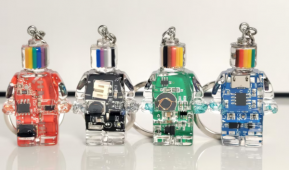
RFID tags come in many shapes and sizes – this high frequency tag from Texas Instruments fi ts into a key fob


Further Reading


site by doubleclique