







Published on the 08/06/2006 | Written by David McNickel
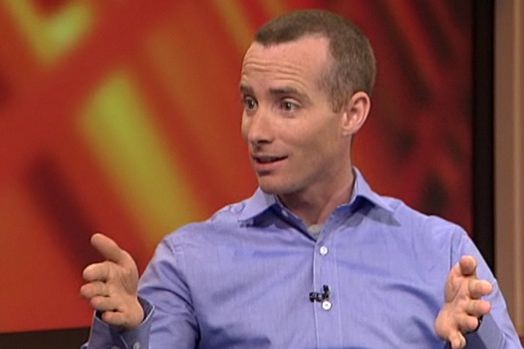
He’s now New Zealand’s 700 million dollar man, but six years ago when iStart’s David McNickel interviewed TradeMe founder Sam Morgan, his auction site wasn’t making a cent…
Local tech-media portrayed him as a lightweight contender to the crown everyone assumed e-Bay would soon arrive to inherit. At the time he gave McNickel his thoughts on how to use technology in business – thoughts that are just as relevant today as they were in August 1999.
The Sam Morgan story that has been bandied around on Campbell Live and Close Up is a rather romantic one – a young guy in Wellington who, frustrated in his search for a second hand heater for his student flat, decides to build New Zealand’s most successful internet business ever – and quickly becomes a multi-multi-multi millionaire. It’s a great ‘feel good’ story, and of course will inspire hundreds (if not thousands) of other local dreamers to found their own online business.
The trouble is, however, that most of them will fall flat on their faces. For while the Sam Morgan story that hit the TV screens this week was essentially factual, it missed out a few important details. For one, the very bright Sam Morgan wasn’t some struggling uni student when he started Trade Me, he was actually gainfully employed as a technology consultant for none other than esteemed consulting firm Deloittes.
His specialty? Internet projects and supply chain issues. He had maintained a keen interest in US online success stories e-Bay, Yahoo and Amazon – and he had been a very astute observer of the bursting of the dotcom bubble. In short, Sam knew exactly where he was going. Right from the word go he surrounded himself with the right technology and the right people to get him there – and he’d actually learnt something from the mistakes of those who came before him. David McNickel asked him all about it;
David McNickel (Interview conducted in August 1999):
Tell me about your website Trade Me, how did you build it and what technology was involved?
Sam Morgan: I did the whole thing myself. It took me two months to build and I built it in my spare time. I had a full-time consulting job at the time. It is entirely MS based. So it’s built on MS sequel server 7 and NT. Basically January and February were the months I built it. The site actually went live back in March. August is when I started to concentrate on it in a full time capacity and invest money in marketing – so March through August was organic growth without any sort of push.
DM: And how many users does it have now?
SM: We are currently getting around 2000 users sessions a day, and we have about 3500 registered users now. We’ve had 1200 registrations in the last 30 days and we are getting upwards of 50 new registrations everyday, so that rate of growth has lifted significantly since we started to focus on it in August.
DM: So is it actually making any money?
SM: It’s always a tentative position and we don’t know quite what the critical mass is that we have to achieve before we are out of the woods.
Today there is basically no money coming in and we are concentrating on growing the user base and we’re investing significant more than we’re making – we’re not making anything really.
This is because we haven’t launched any of the value added services we are looking to add in next. The first value add service is the escrow service which we are releasing on Monday.
It’s percentages based. If we are going to hold $500 in the trust account we will take a 5% commission, so buying and selling is free and doing it securely will cost 5%.
The best thing about it for the seller is that it actually provides them with an auditable process and it shows them as trust worthy – we want this to become the defacto way of doing things. 80% of all fraud reported on the internet now is related to auctions. It’s a big issue and it’s important for us to get it out there in order for us togrow and for us to find a revenue model is to ramp up the merchant services. The area we want to grow is keeping ourselves as a trusted service provider, rather than someone who actually puts books in boxes and sends them to people. We see auctions as examples of the business models we are trying to pursue – basically high scalability low margins, low individually but high gross margins – and basically all automated businesses. That’s what we’re trying to do.
DM: What’s the smartest thing you’ve done so far?
SM: The fact that we made it free. The reason why we made it free was that we saw huge barriers to entry in terms of growing when you have large players such as Yahoo and Amazon and everybody else in the top 10 Auction sites now being free. I think e-Bay holds quite a tentative position in terms of charging fees for it simply because it’s not really a large value added service. Also it’s good we did not want to depend on ads as a revenue model, that’s not a particularly innovative idea and I think it is becoming stunningly obvious that that is a bad model to try and base a business on. It’s important that we didn’t go out from the outset with that eyeballs and banner ad idea. The value and pricing for that is just going through the floor now.
DM: What’s the No.1 issue putting the brakes on e-business in NZ?
SM: For ordinary businesses, the problem is one of achieving benefits of scale. NZ businesses can less readily justify technology investment when the costs are the same as countries where the population is 50 times larger. There’s a need to show a business case with realistic assumptions of uptake and achievable cost savings. No NZ companies will see a pay back from a $10 million e-procurement project for example.
DM: What are some common misconceptions about e-business and e-business innovation?
SM: That technology is the hardest part of your e-business problem. Innovation takes commitment from those in power to realise the potential benefits – from customers, staff and business partners. Having a good idea is the easiest part of most problems.
DM: What’s unique about the NZ e-business experience compared to say, the US?
SM: Lack of capital forces us to think of smarter ways to do things. There is a greater need for pragmatic solutions when you can’t always commission a consulting project to solve your problems.
DM: In e-business terms, does NZ have any strategic advantages over our international competitors?
SM: We speak English, have international quality skills, and can price competitively. We also create more generalists who can communicate with both technologists and business people.
DM: What’s the easiest first step to e-business that any business could take right now?
SM: Look at where the internet can add the most value to your business. Is it by tighter integration with suppliers? By providing your customers with greater online support? By selling your products internationally? Try small projects in the areas you identify and seek lots of feedback from your target audience. They will teach you more than you realise.